

Finding Lost Voices: The Radical Acts of Radclyffe Hall (1880 – 1943) and how her book, The Well of Loneliness pushed against gender norms
A weekly email that brings back the voices of those who have been forgotten or misremembered

Right now, I’m smack in the middle of finishing the first chapter of my next book, Strong, about the history of strong-bodied women in America. So I am constantly thinking about gender norms—specifically, how they relate to women, their physical bodies, and strength training.
All my life, I’ve been a strong-bodied woman—an athlete and someone who, when facing struggles, turns to movement and sports as a way to return to herself.
Isn’t it strange how, when you’re deep into a project, the topic starts showing up everywhere? That’s what happened when I picked up a first edition copy of The Well of Loneliness from Womb House Books. (Sorry in advance to anyone who clicks on the link to their online bookshop, as it’s incredible and you'll likely buy something.)
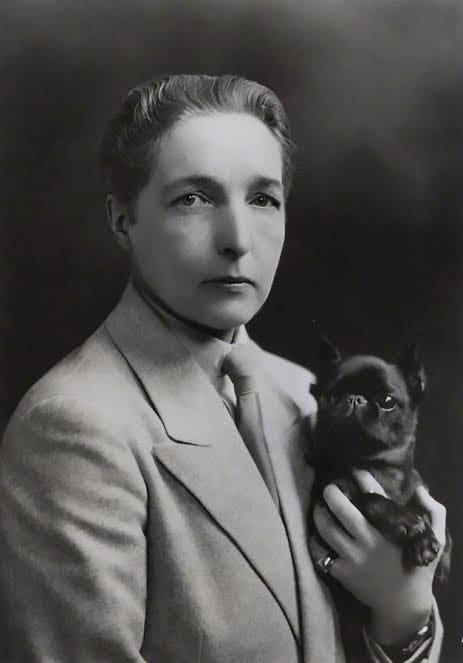
What struck me was how Radclyffe Hall described her protagonist, Stephen Gordon’s, relationship with her body and her desire for physical activity. Here’s one of the many examples. In it, a teenage Stephen is trying to convince her father to let her begin weight training and fencing.
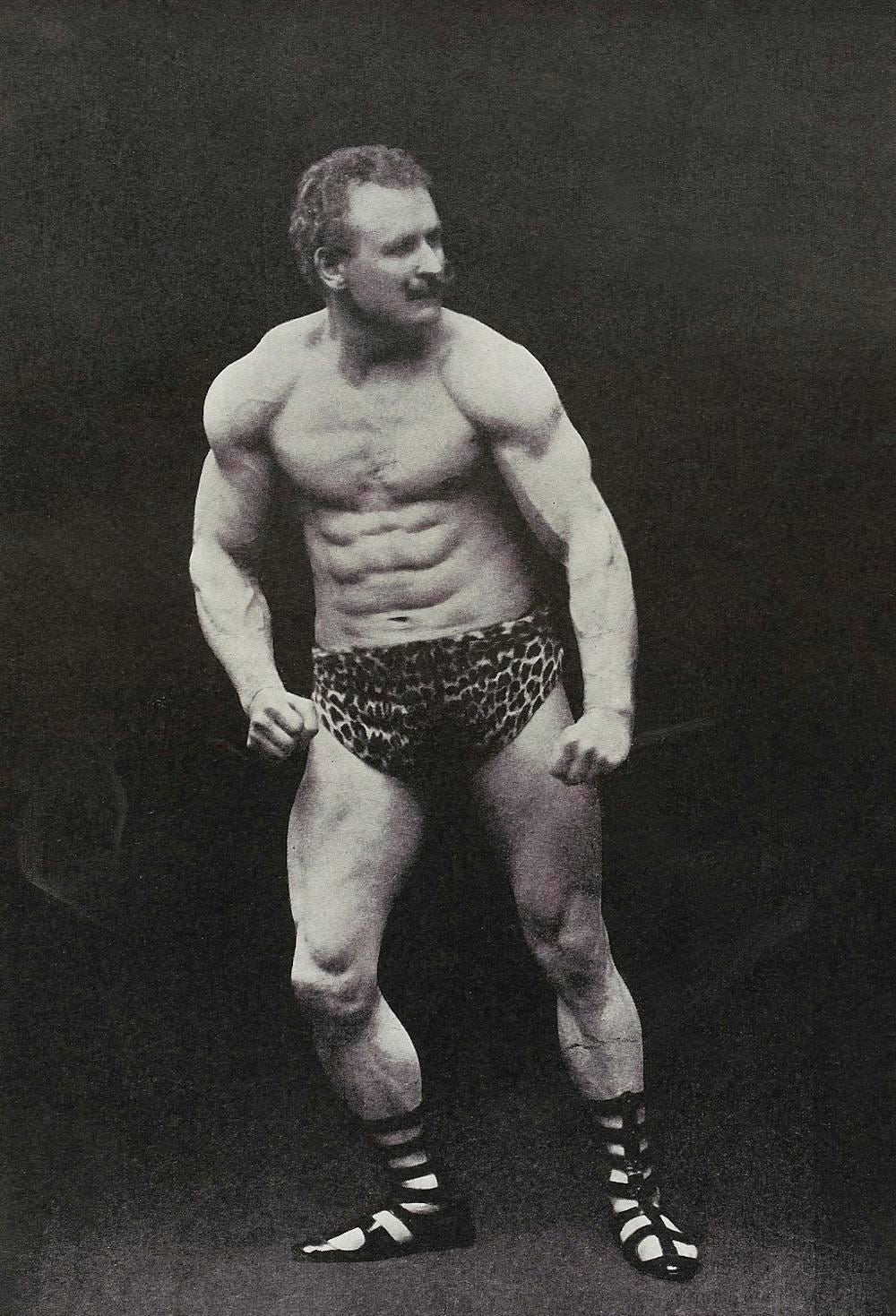
**Quick note, “Sandowing” just means doing physical activity like Eugen Sandow, a famous strongman and bodybuilder of the era.
“I want to go in for Sandowing,” [Stephen] informed [her father], as though they were discussing a career.
He laughed: ‘Sandowing? Well, and how will you start it?”
Then Stephen explained about ex-Sergeant Smylie.
”I see,” nodded Sir Phillip, “you want to learn fencing.”
”And how to lift weights with my stomach,” she said quickly“And now life was full of new interest for Stephen, an interest that centered entirely in her body. She discovered her body for a thing to be cherished, a thing of real value since its strength could rejoice her….Stephen would stop in the middle of lessons to roll back her sleeves and examine her muscles; then Mademoiselle Duphot, instead of protesting, would laugh and admire her absurd little biceps. Stephen’s craze for physical culture increased, and now it began to invade the schoolroom. Dumb-bells appeared in the school room bookcases, while half-worn-out gym shoes skulked in the corners.”
Stephen’s love of her body—her “discovering her body for a thing to be cherished”—is so refreshing to read in a book from this era. Whenever something happened to Stephen, she would pick up her dumbbells and reconnect with her physical self. Throughout her life, we see her committed to her sport of fencing.
However, while it’s extraordinary to see this depiction of a female athlete in print, the catch is that The Well of Loneliness presents this behavior as abnormal (along with Stephen’s sexuality). The idea that a woman could be strong-bodied, not only interested in sports but competitive about it, was thought to be implausible. Perhaps this book helped entrench the stereotype—still present in some gyms and locker rooms—that strong-bodied and/or athletic women must be lesbians.
What I do know is that this book caused significant controversy when it was published in 1928.
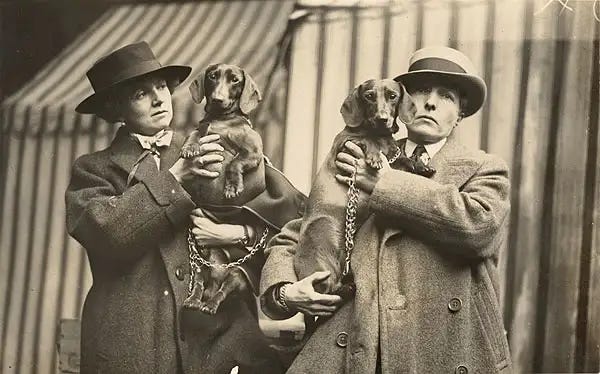
Marguerite Antonia Radclyffe Hall (1880–1943), who wrote under the pen name Radclyffe Hall, lived relatively openly as a lesbian during a time when such relationships were widely condemned. She attended King’s College London and later studied in Germany. Hall began her career as a poet, publishing five volumes of verse before moving into fiction with The Forge, The Unlit Lamp, and Adam’s Breed, the latter of which won both the Prix Fémina and the 1927 James Tait Black Memorial Prize for Fiction.
After the success of Adam’s Breed, Hall was eager to embark on a more ambitious project. She wrote to her publisher saying she was “put[ting] [her] pen at the service of some of the most persecuted and misunderstood people in the world.” But when Hall published The Well of Loneliness in 1928, her hard-won fame turned almost overnight into notoriety.
As I mentioned earlier, the book centers on the life of Stephen Gordon, a “butch” or masculine-presenting lesbian, who is spurned by society and never accepted by her own mother in her quest for love and belonging.
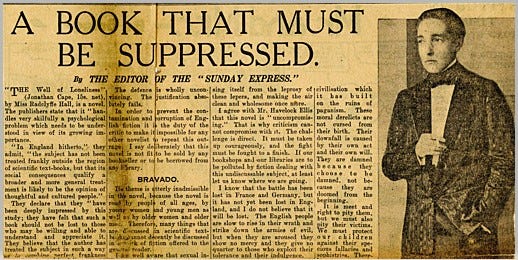
In August 1928, James Douglas, editor of The Sunday Express and a dedicated moralist, launched a scathing attack on the novel and its author. In his piece “A Book That Must Be Suppressed,” he called it:
the cleverness of the book intensifies its moral danger…The book must at once be withdrawn. I hope the author and the publishers will realise that they have made a grave mistake, and will without delay do all in their power to repair it
—James Douglas, 1928
Douglas believed the book was a form of propaganda, asking readers to treat same-sex relationships between women with tolerance rather than fear or disgust. He used his newspaper to lead a successful public campaign against the book.
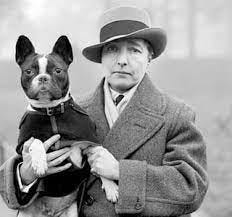
The book was put on trial (Leonard Woolf, Virginia Woolf’s husband, even testified) and ultimately condemned. A London magistrate, Sir Chartres Biron, ruled that while the novel was “dignified and restrained,” it made an appeal to “decent people” to recognize lesbianism and understand that those who experienced it were not at fault. He judged the book an “obscene libel” and ordered all copies destroyed. As a result, the novel was not published in the UK again for 20 years.
Years later, the book became a bestseller and is now regarded as a groundbreaking work in lesbian literature. But perhaps we should also recognize it as a landmark of feminist literature, for how it depicts a woman’s relationship with her athletic body.
Read a free version of The Well of Loneliness here.
Or, for a wonderful edition edited by scholars Jana Funke and Hannah Roche, read this one.
Upcoming Events
July 2025
July 20-25 - The Napa Valley Writers Conference in Napa, CA - for a full schedule visit: https://www.napawritersconference.org/napa-valley-writers-conference/2025-readings-craft-talks-schedule/
July 26, 1:00 PM - Poetry in Parks with Ada Limon, Nicole Callihan, Forrest Gander and Iris Jamahl Dunkle, Armstrong Redwoods Forest Theater, 17000 Armstrong Woods Rd, Guerneville, CA 95446.
Map: https://maps.app.goo.gl/tP9ZTak62vtQQfsx9
September 20 - Iris Jamahl Dunkle in conversation with Holly Baggett, author of Making No Compromise at the Kansas Book Festival.
**Good news! An audiobook of my latest book, Riding Like the Wind: The Life of Sanora Babb,, will be released in September!
Thank you for this fascinating post, Iris. The Well of Loneliness is central to one of the chapters of the book I'm working on, so I recently re-read it (actually listened to it, it's wonderful in audiobook format). In my last read, I was also struck, as you were, by passages about the body. A truly classic work of literature that was banned and put on trial on both sides of the Atlantic!
This is fascinating! Thank you for introducing me to Radclyffe Hall (and including so many photos of her with her dogs!)